Human–Computer Integration: Towards Integrating the Human Body with the Computational Machine | Rakesh Patibanda
Research Portfolio

Research Project

Human–Computer Integration: Towards Integrating the Human Body with the Computational Machine
HCI Theory Human-Computer Integration Journal Article
Year2022
VenueFound. Trends Hum.-Comput. Interact.
Pagespp. 1–64 (78 pages)
Human–Computer Integration: Towards Integrating the Human Body with the Computational Machine

An academic monograph laying out a new framework for thinking about technology that integrates with the human body, not just technology that the body uses. It identifies key questions researchers need to answer to responsibly advance this vision.

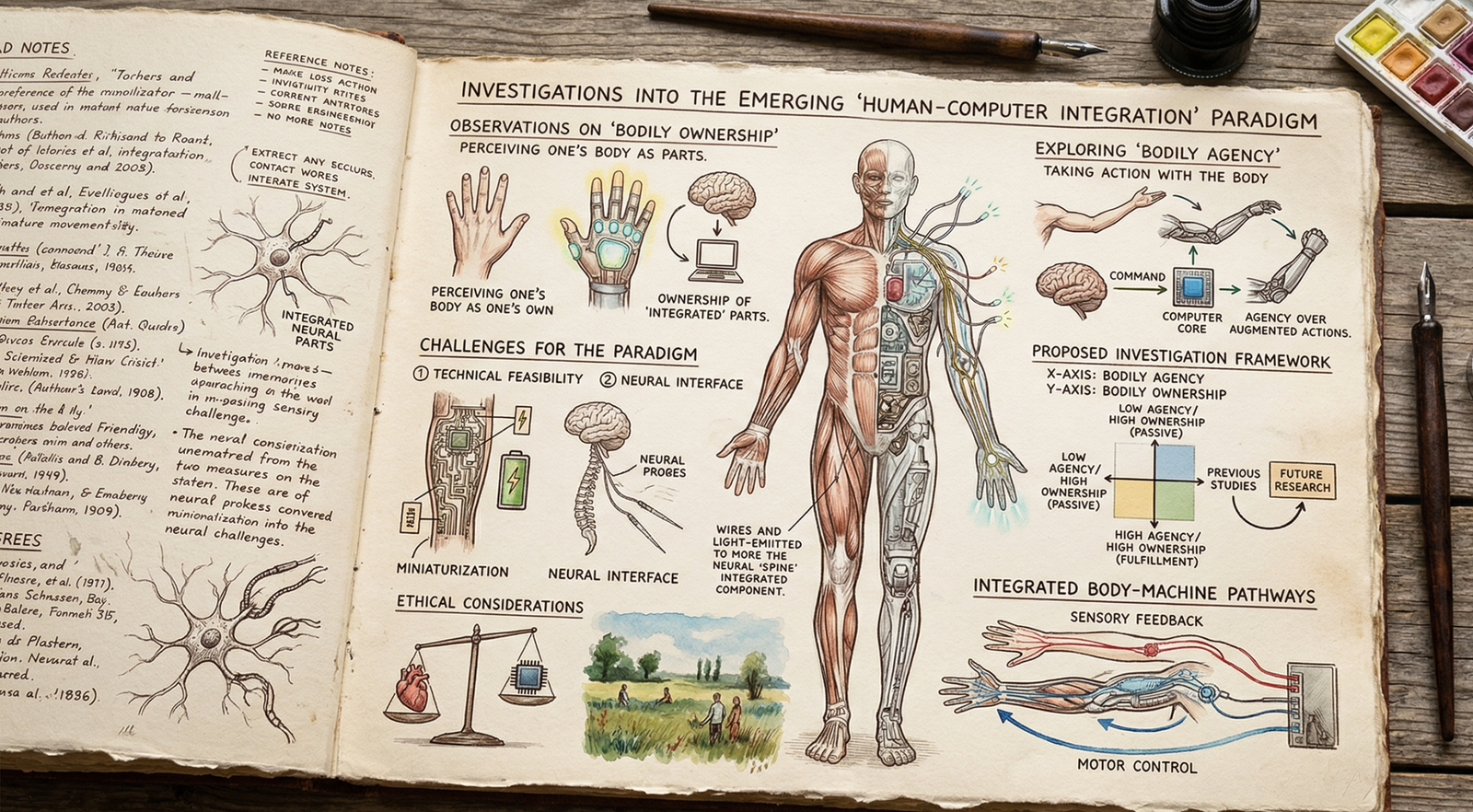
Human-Computer Integration (HInt) is an emerging new paradigm in the human-computer interaction (HCI) field. Its goal is to integrate the human body and the computational machine. This monograph presents two key dimensions of Human-Computer Integration (bodily agency and bodily ownership) and proposes a set of challenges that we believe need to be resolved in order to bring the paradigm forward. Ultimately, our work aims to facilitate a more structured investigation into human body and computational machine integration.

Florian ‘Floyd’ Mueller, Nathan Semertzidis, Josh Andres, Martin Weigel, Suranga Nanayakkara, Rakesh Patibanda, Zhuying Li, Paul Strohmeier, Jarrod Knibbe, Stefan Greuter, Marianna Obrist, Pattie Maes, Dakuo Wang, Katrin Wolf, Liz Gerber, Joe Marshall, Kai Kunze, Jonathan Grudin, Harald Reiterer, Richard Byrne

Human-computer integration embodiment augmented human cyborg fusion
Florian ‘Floyd’ Mueller
NS
Nathan Semertzidis
JA
Josh Andres
MW
Martin Weigel
SN
Suranga Nanayakkara
RP
Rakesh Patibanda
ZL
Zhuying Li
PS
Paul Strohmeier
JK
Jarrod Knibbe
SG
Stefan Greuter
MO
Marianna Obrist
PM
Pattie Maes
DW
Dakuo Wang
KW
Katrin Wolf
LG
Liz Gerber
JM
Joe Marshall
KK
Kai Kunze
JG
Jonathan Grudin
HR
Harald Reiterer
RB
Richard Byrne